How to Choose the Right Omega-3 Supplement: What Most People Get Wrong
So you have decided to take omega-3 seriously. Maybe you read our previous article on omega-3 and recurring headaches, or maybe you have come across the research yourself. Either way, you know that omega-3 can make a real difference for headache frequency and intensity, but only if you are taking the right kind, in the right amount.
That is where a lot of people go wrong.
In this article we get specific: what actually makes an omega-3 supplement effective, what to watch out for on the market, and what we personally take and recommend.
Walk into any pharmacy or health food store and you will find dozens of omega-3 options. Most of them have a few things in common that work against you.
The dose is too low.
Standard capsules typically contain 250 to 500 mg of EPA and DHA combined. The clinical studies that showed meaningful benefits for headache and migraine reduction used at least 1,500 mg per day, and the most impressive results came from doses around 2,000 mg. Taking a single low-dose capsule and expecting the same outcome is like taking half a dose of any other supplement and wondering why it is not working.
Most capsules are not full spectrum.
High-quality omega-3 from fish naturally contains EPA, DHA, DPA, and a range of other beneficial fatty acids. Many commercial capsules are heavily processed and stripped down to only EPA and DHA in isolated form, removing the supporting fatty acids that help your body absorb and use the omega-3 more effectively.
Oxidation is a real problem.
Omega-3 oils are sensitive to air, heat, and light. Once they oxidise, they are not just less effective; they can actually produce compounds that work against the benefits you are looking for. The most obvious sign of oxidised oil is the familiar fishy burp or aftertaste. A fresh, quality oil should have almost no smell and no aftertaste.
There is no feedback loop.
Most people take supplements with no way of knowing whether anything is actually changing in their body. Without measuring your omega-3 index before and after, you are essentially guessing.

Your brain is nearly 60% fat (by dry weight), and omega-3 fatty acids are essential for maintaining its structure and normal function.

Imbalanced omega-6 to omega-3 ratio
Modern Western diets often show a strong dominance of omega-6 compared to omega-3.
If you want an omega-3 supplement that delivers what the research supports, these are the things that matter:
A sufficient daily dose of at least 1,500 mg of EPA and DHA.
This is non-negotiable if you want to shift your omega-3 index in a meaningful way.A full-spectrum formula that retains the natural fatty acid profile of the fish, including DPA alongside EPA and DHA, rather than an isolated concentrate.
Freshness guaranteed by formulation, and verified by oxidation values. Fish oil oxidises when exposed to air, heat, or light. Oxidised oil is not just less effective; it can actively work against the benefits you are looking for. That familiar fishy burp is often a sign of degraded oil, and a reason to be concerned, not just mildly inconvenient.
The objective measure here is the TOTOX value: a total oxidation score calculated from two underlying markers. The international industry standard allows a maximum of 26. A genuinely high-quality oil scores below 10. Ask your brand for a Certificate of Analysis, or check if they publish one on their website. If they don't, that in itself is an answer.
The best liquid omega-3 products also address oxidation structurally by blending the oil with cold-pressed extra-virgin olive oil, which actively slows degradation after opening. A capsule shell cannot do the same; it only hides the smell.
Sourced from sustainably caught fish and manufactured with quality controls in place.
And most importantly: a blood test to confirm it is actually working.
Here is something most supplement brands do not offer, but should.
Your omega-3 index is measurable. A dried blood spot test, done at home with a simple finger prick, gives you an objective number. You know where you start, and after a few months of supplementation, you can test again to see what has actually changed in your body.
This removes all guesswork. You are no longer hoping the supplement is working. You know.
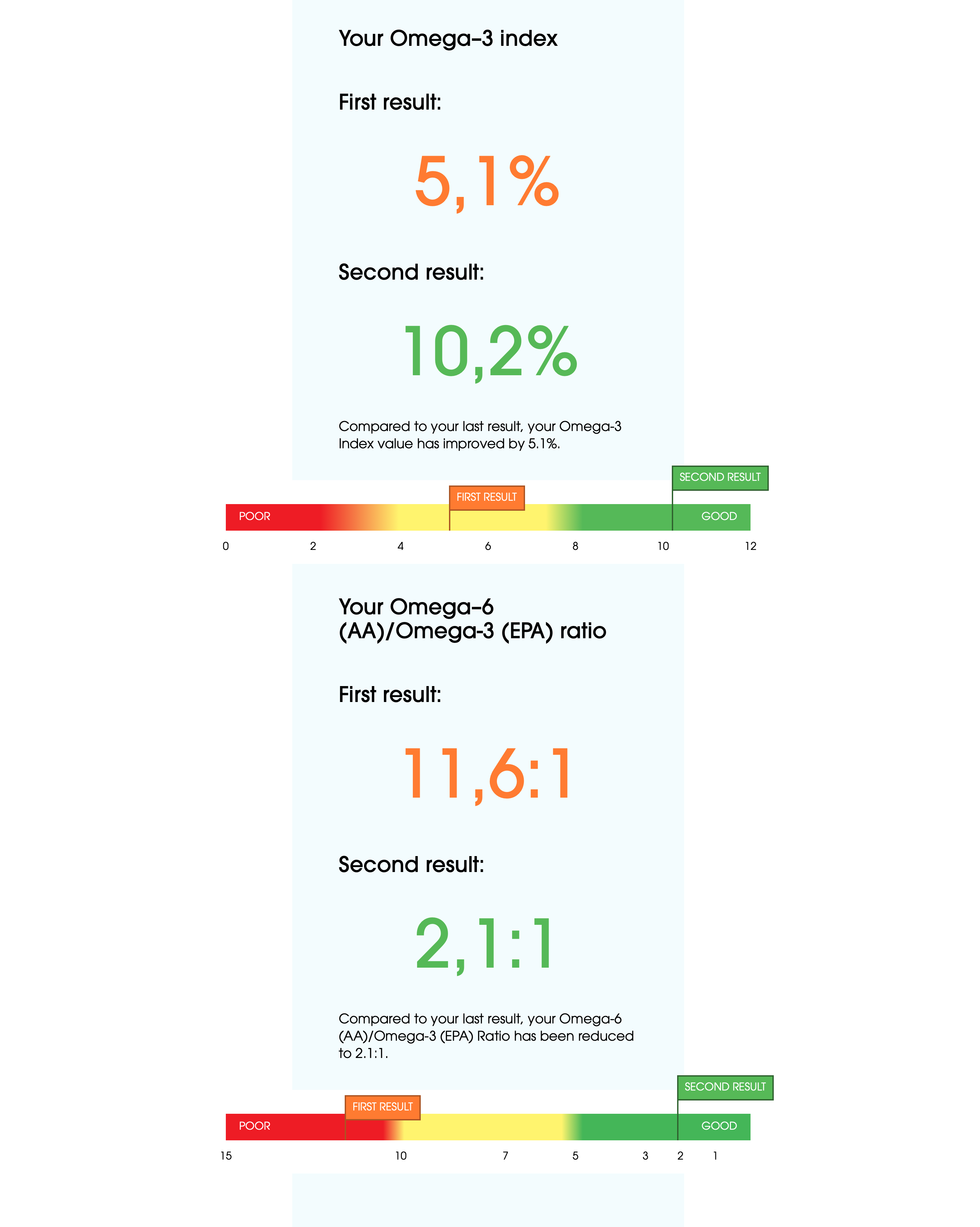
Without measuring your omega-3 index before and after, you are essentially guessing.
After going through everything we described above — the research, the criteria, the oxidation values, our own blood test results — we landed on one specific product. It is the one we have both used consistently, and the one we recommend to anyone who asks.
We have kept our full recommendation off this blog intentionally. A product recommendation deserves its own context: why we chose it, what our personal experience has been, and how you can get started in the right way.

Getting your omega-3 levels right is a meaningful step. But if you have been dealing with recurring headaches for a long time, there are usually other contributing factors at play as well. Sleep, jaw tension, hormonal patterns, and dietary triggers all interact with how your nervous system responds to pain.
In our Headache Reset Method, we bring all of these factors together in a structured, step-by-step approach designed specifically for people who are done treating symptoms and want to understand what is actually driving their headaches.
→ Discover the Headache Reset Method
And if you are not following us on YouTube yet, that is where we share ongoing science-based content on headaches, brain health, and practical approaches to feeling better:

Sources
Tseng et al. (2024). High Dosage Omega-3 Fatty Acids Outperform Existing Pharmacological Options for Migraine Prophylaxis: A Network Meta-Analysis. Advances in Nutrition, 15(2), 100163.
Chen et al. (2024). Neuroimmunological effects of omega-3 fatty acids on migraine: a review. Frontiers in Neurology, 15, 1366372.
PMC (2025). Effects of omega-3 fatty acids on chronic pain: a systematic review and meta-analysis.
Head2HealSisters provides science-based health education. This article is informational and does not constitute medical advice. Always consult a healthcare professional for personal health decisions.
By Joline Mutsaers | July 19, 2026
