Could Omega-3 Be the Reason Your Headaches Keep Coming Back?
If recurring headaches are a regular part of your life, you have probably tried a lot of things. Different painkillers. More sleep. Less screentime. And while each of these can help in the moment, the attacks keep coming back.
What if one contributing factor is something most people have never even considered, let alone tested?
We are talking about omega-3 fatty acids. Not as a cure, but as a genuinely overlooked piece of the headache puzzle with a growing body of research behind it.
In this article, we break down what omega-3 does in your brain and nervous system, why the balance between omega-6 and omega-3 matters more than most people realise, and what the latest science says about this connection. We also cover how you can find out where you personally stand.
Want to hear us walk through this topic? We just published a video on
our YouTube channel covering exactly this:
Omega-3 fatty acids are essential fats, which means your body cannot produce them on its own. You have to get them through food or supplementation. The two most important forms for your brain are:
EPA (eicosapentaenoic acid)
DHA (docosahexaenoic acid)
DHA alone makes up approximately 8% of the total weight of the brain. It is a structural part of every neuron, influencing how flexible cell membranes are, how well nerve cells communicate with each other, and how effectively your brain regulates signals, including pain signals.
EPA plays a different but equally important role: it helps regulate inflammation. Headaches and migraines are strongly linked to neuroinflammation, a process in which the nervous system and surrounding blood vessels become inflamed and hypersensitive. EPA works to reduce this by promoting anti-inflammatory compounds and blocking certain pro-inflammatory pathways.
When omega-3 levels are low, both of these processes are affected. Cell membranes become less flexible, inflammatory responses are harder to resolve, and pain sensitivity can rise. For someone whose nervous system is already prone to headaches, that is a significant disadvantage.

Your brain is nearly 60% fat (by dry weight), and omega-3 fatty acids are essential for maintaining its structure and normal function.

Imbalanced omega-6 to omega-3 ratio
Modern Western diets often show a strong dominance of omega-6 compared to omega-3.
Here is where the picture gets more specific, and for many people, more recognisable.
Your body needs both omega-3 and omega-6 fatty acids. Omega-6 is not inherently harmful. But the ratio between the two matters enormously.
In traditional diets, this ratio was roughly 1:1 or 2:1. Today, largely because of how much vegetable oil, fried food, and processed food is in the average Western diet, the ratio in Europe sits around 15:1 (omega-6 to omega-3). In the United States, it can reach 25:1.
When omega-6 dominates, the body naturally produces more pro-inflammatory compounds. For someone whose nervous system is already sensitive to headache triggers, this imbalance can effectively turn up the volume on inflammation and pain sensitivity.
The important thing here is that this ratio is measurable. And for many people dealing with recurring headaches, it has never been checked.
The science on omega-3 and headaches has developed significantly in recent years, and the findings are worth knowing about.
A 2024 network meta-analysis published in Advances in Nutrition (Tseng et al.) pulled together data from 40 randomised controlled trials, involving 6,616 people with episodic or chronic migraines. High-dose EPA and DHA supplementation, at least 1,500 mg per day, produced the greatest reduction in both migraine frequency and severity of all treatments in the comparison, including standard preventive medications. Patient acceptability was also higher with omega-3 than with the pharmacological options studied.
A 2025 randomised controlled trial added to this evidence, finding that 2,000 mg of EPA daily significantly reduced both the number of migraine days and attack frequency in people with chronic migraine, alongside measurable improvements in quality of life.
Importantly, these effects were dose-dependent. Most studies showing meaningful results used amounts well above the 250 to 500 mg found in standard capsules. This is one key reason many people try omega-3 and notice little difference: the dose was simply not enough to shift anything.

"Omega-3 supports every cell in your body, including the ones that matter for headache health."
One of the most practical concepts to come from this research is the omega-3 index.
The omega-3 index measures how much EPA and DHA is actually built into your red blood cell membranes, expressed as a percentage. It reflects your long-term omega-3 status, not just what you ate last week. An index above 8% is consistently linked to better brain function, lower inflammation, and better cardiovascular health. Most people in Western countries who do not supplement score between 4% and 5%.
You can measure your omega-3 index with a simple dried blood spot test at home. For anyone dealing with recurring headaches, knowing this number removes the guesswork about whether omega-3 is a relevant factor for you personally.
Red blood cells renew approximately every 120 days. That is roughly how long it takes for omega-3 to be meaningfully integrated into your cell membranes at a new level. Most studies showing clear headache-related benefits ran for at least 12 to 18 weeks.
Consistency over time, at the right dose, is what the research actually supports. Starting omega-3 and expecting results within two weeks is unlikely to reflect what you would see after four months of consistent use.
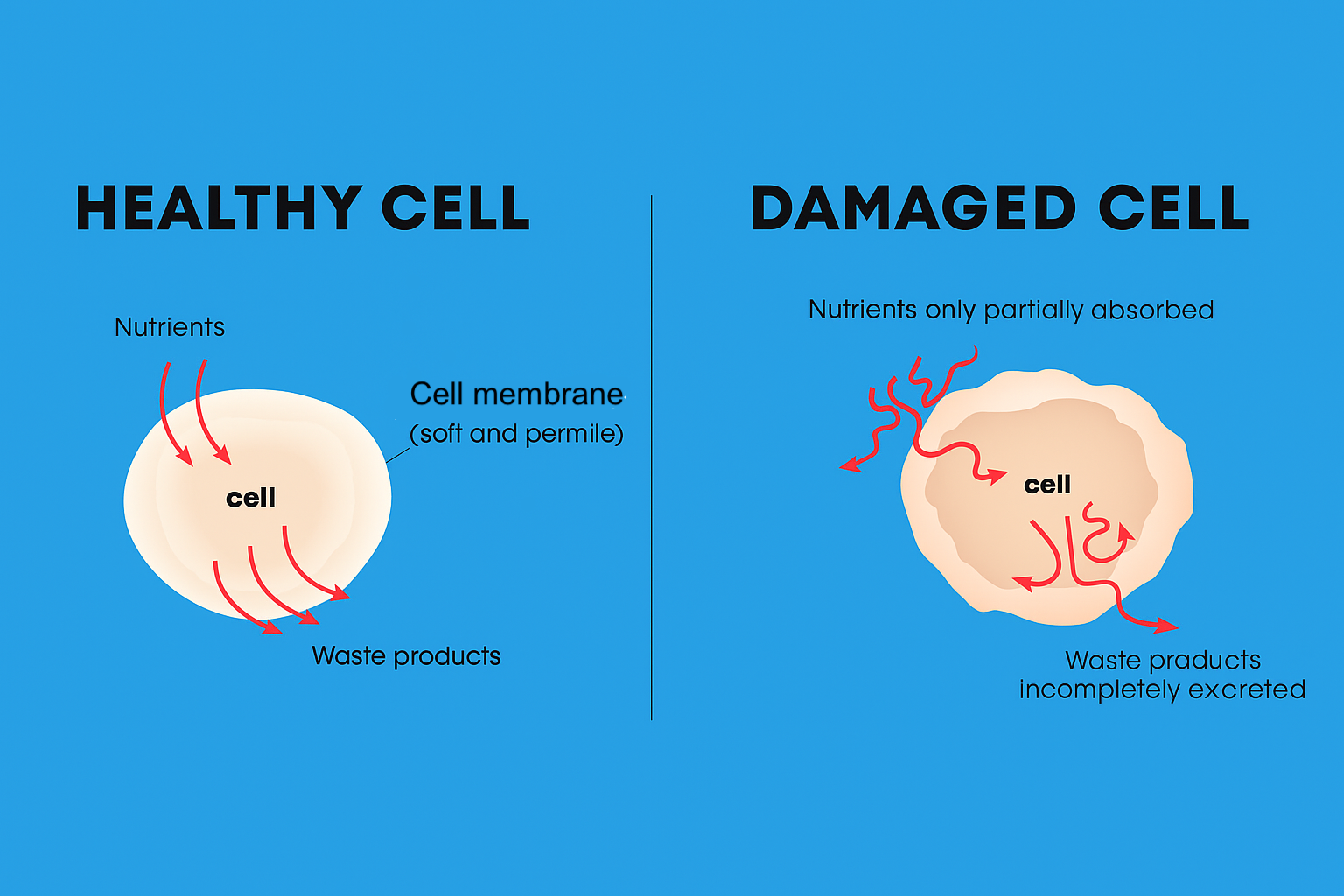
Healthy cell membrane (Omega-3 Index ≥ 8%)
Nutrients can enter the cell more efficiently, while waste products can leave more easily.
Less flexible cell membrane (Omega-3 Index < 8%)
Nutrient uptake and waste removal may become less efficient.

Omega-3 matters, but it is not the whole story. Recurring headaches rarely have a single cause. Sleep patterns, hormonal fluctuations, mindset, jaw tension, stress, and dietary triggers all play roles that vary from person to person.
In our Headache Reset Method, we work through all of these layers together, because lasting relief almost always means looking at the full picture rather than one variable at a time.
> → Explore the Headache Reset Method
And if you found this article helpful, subscribe to our YouTube channel for more science-based content on headaches and natural approaches to long-term relief.
Sources
- Tseng et al. (2024). High Dosage Omega-3 Fatty Acids Outperform Existing Pharmacological Options for Migraine Prophylaxis: A Network Meta-Analysis. Advances in Nutrition, 15(2), 100163.
- Chen et al. (2024). Neuroimmunological effects of omega-3 fatty acids on migraine: a review. Frontiers in Neurology, 15, 1366372.
- PMC (2025). Effects of omega-3 fatty acids on chronic pain: a systematic review and meta-analysis.
Head2HealSisters provides science-based health education. This article is informational and does not constitute medical advice. Always consult a healthcare professional for personal health decisions.
By Joline Mutsaers | June 30, 2026

Discover The Hidden Cause Of Your Headaches (That Most People Miss)
Download our free guide and discover why painkillers often aren't the real solution and what you can start doing today.
